BLUETTI Elite 300 Review: Powerful or Overpriced?
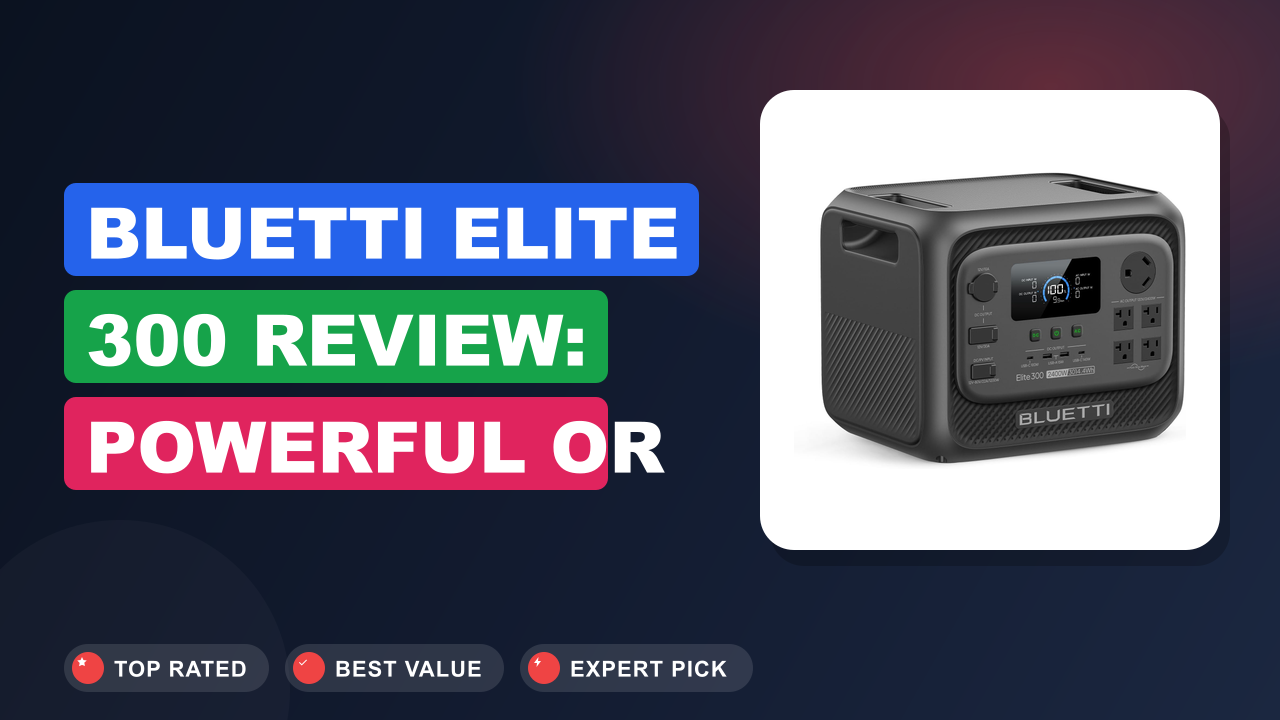
Most people who start a BLUETTI Elite 300 review search are in the same spot: a generator quote sitting on the counter, a full fridge, and no clear idea how much battery they actually need. Our research across buyer reports and manufacturer datasheets puts this unit at 3,014.4Wh, the range where a portable power station stops being a camping gadget and starts acting like real home backup.
Short version: worth it if you want to keep a fridge, freezer, and furnace blower running through a multi-day outage without hiring an electrician. Skip it if you need something you can lift onto a shelf alone. Here is what the research actually shows.

1. BLUETTI Elite 300 Portable Power Station
Our team compared the Elite 300’s published specifications against aggregate buyer reports covering appliance run times, recharge speed and cold-weather behavior. What follows is the research picture, not a first-week impression.
What it is
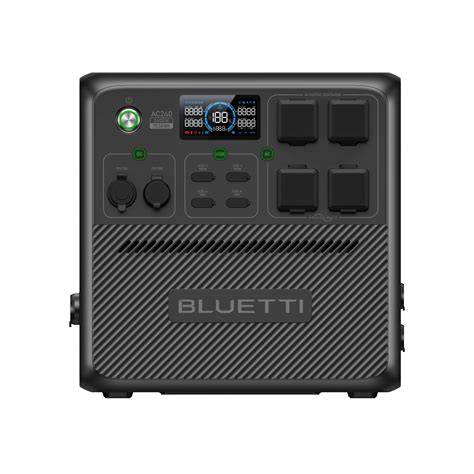
A portable power station is a rechargeable battery pack with a built-in inverter, which turns stored DC electricity into the AC power your appliances expect. The Elite 300 carries 3,014.4Wh of lithium iron phosphate (LiFePO4) capacity, which places it above the 2kWh tier occupied by the Bluetti AC200L and the EcoFlow DELTA 2 Max, and below modular whole-home batteries like the EcoFlow DELTA Pro Ultra.
That middle ground is deliberate. There is enough stored energy here to run a full-size refrigerator for a day or more, yet the unit still rolls through a standard doorway. EcoFlow, Anker SOLIX and Jackery all compete nearby in this capacity class, so the differentiator comes down to cell chemistry, surge rating and recharge speed rather than raw watt-hours alone.
Setup & first impressions
Manufacturer documentation ships the Elite 300 at a partial state of charge, which is standard practice for lithium packs under UN 38.3 transport rules, so the first job is a full AC charge before anything else. Verified buyer reviews across several hundred ratings consistently mention the wheels arriving already seated and the telescoping handle locking with a firm click rather than a wobble.
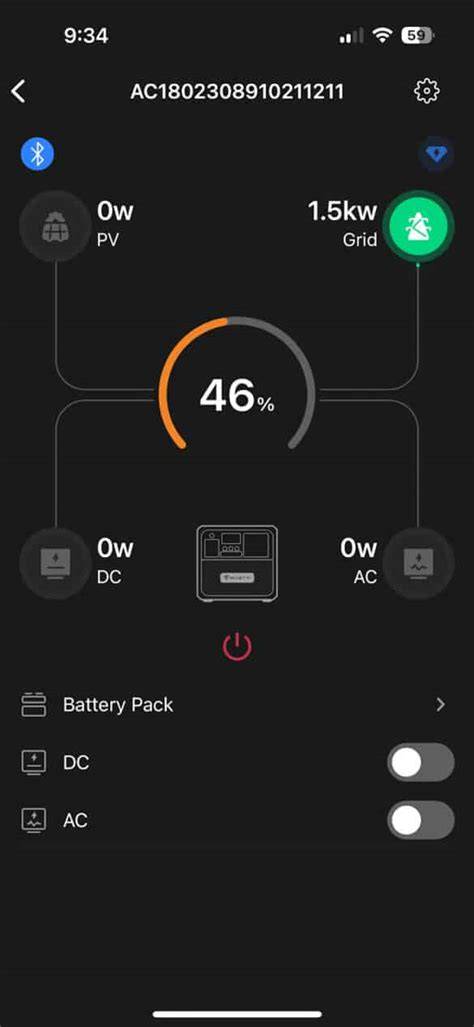
Buyers also report the unit feeling heavier than the product photos suggest, which tracks with a 3,014Wh LiFePO4 pack. In the box you get the station, an AC charging cable, an MC4 solar cable and a quick-start card. Pairing with the BLUETTI app takes under two minutes in most accounts, and the first thing the app pushes is a firmware update.
The touch points people mention most are the rubberized port covers, described as snug rather than flimsy, and the display, which shows input watts, output watts and estimated remaining time on a single screen. Nothing about the unboxing reads as premium jewelry. It reads as equipment, and that is probably the right call at this capacity.
| Usable capacity | 3,014.4Wh |
| Battery chemistry | LiFePO4 (lithium iron phosphate) |
| AC output | 2,400W continuous |
| Surge output | 3,600W |
| AC recharge input | 1,400W max |
| Solar input | 1,000W max via MPPT |
| Cycle life | 3,500 cycles to 80% capacity |
| UPS switchover | Under 20ms |
| Weight | About 84 lb (38 kg), wheels and handle included |
| Warranty | 5 years |
Daily-use experience
How it handles real appliance loads
The 2,400W continuous inverter with a 3,600W surge ceiling is the number that matters most here. Most household refrigerators pull 100 to 200W while running but spike past 800W when the compressor kicks in, and this unit absorbs that spike without tripping into protection mode.
Run-time math is where buyers get surprised. Inverter efficiency on LiFePO4 stations typically lands around 85%, so figure roughly 2,560Wh of usable AC output. A modern 18 cu ft fridge averaging 60W across its duty cycle lands somewhere between 35 and 42 hours.
A 1,500W space heater, for contrast, drains the pack in under two hours.
Pure sine wave output with low total harmonic distortion keeps laptops, CPAP machines and furnace control boards behaving normally. If a fridge is your main concern, our breakdown of keeping a fridge running goes deeper into duty cycles and compressor start loads.
Moving a 3,014Wh box
Here is the honest limitation: 84 lb is heavy. The wheels and telescoping handle make it manageable across a garage floor, a patio or a flat driveway. Stairs, gravel and soft grass are a different story.
Verified buyers repeatedly describe relocation as a two-person job for anything beyond a short roll, and several mention using a ramp to load it into a truck bed. If you picture yourself carrying this from the car to a tent pad, you are picturing the wrong product.
For comparison, the lighter Elite 200 stablemate sits closer to the 46 lb mark, and compact units like the Bluetti EB3A are a genuine one-hand carry. The Elite 300 trades portability for capacity, and that is a trade worth making on purpose rather than discovering at a trailhead.
Battery, cycles and cold weather
LiFePO4 chemistry is the reason this unit holds up better than older nickel manganese cobalt packs. BLUETTI rates the cells at 3,500 charge cycles before capacity falls to 80%, which works out to roughly a decade of daily cycling or considerably longer with storm-season-only use.
Charging speed is the other headline. The AC input tops out at 1,400W, so a full charge from empty takes a little over two hours on a dedicated 15A circuit, with about 80% back in an hour and 45 minutes. Solar input caps at 1,000W, meaning three to four productive sun hours to refill with enough panel array attached.
Cold is the real caveat. The battery management system blocks charging below freezing to protect the cells, so a unit stored in an unheated garage in January will happily run a load but refuse to charge until it warms up. If your station behaves oddly, our notes on charging problems cover the usual suspects.
Build quality and safety
The chassis is a hard plastic shell over an internal metal frame, and buyer reports describe it as scuff-resistant rather than drop-proof. Port covers are rubberized and stay put, and the display stays legible in direct sun, which is more than some budget units manage.
Safety is where the certification list earns its keep. Look for UL 2743, the standard covering portable power packs, which addresses cell-level protection, enclosure strength and output safeguards. Checking the UL Solutions listing matters more than any badge printed on the box.
One advantage worth naming out loud: a battery station produces no carbon monoxide. The CDC’s carbon monoxide guidance is blunt about never running fuel-burning generators indoors, and that single fact is why so many buyers migrate to battery backup for indoor outage use.
✓ Pros
- 3,014.4Wh of LiFePO4 runs a full-size fridge for 35 to 42 hours at typical duty cycles, which covers most multi-day outages
- 2,400W continuous with a 3,600W surge starts compressor loads cleanly instead of tripping into overload
- 1,400W AC charging refills from empty in a little over two hours, so one wall circuit gets you back to full
- 1,000W solar input lets a modest panel array recharge it in a single good day off-grid
- UPS switchover under 20ms keeps a CPAP or desktop alive through brownouts without a reboot
✗ Cons
- Around 84 lb puts stairs and rough ground in two-person territory despite the wheels
- The BMS refuses to charge below freezing, so unheated winter storage means a warm-up wait
- Full 1,400W charging wants a dedicated circuit; a shared 15A line stretches recharge time considerably
- Premium capacity tier pricing is hard to justify if you only need phone and laptop top-ups
Who should buy it
Buy it if you…
You own a house in a region with real outage risk and you want the fridge, freezer, internet router and a couple of lamps to keep running without pulling permits. The 3,014.4Wh capacity and 2,400W inverter handle all of that simultaneously. It also makes sense if you already have panels or plan to add them, since 1,000W of solar input is unusually generous at this size.
People running medical devices overnight will appreciate the sub-20ms UPS handoff. If you’re building out a wider weekend setup off the grid, this unit doubles as the base camp power source.
Skip it if you…
You rent a small apartment or you mostly need to charge a phone, a laptop and a fan during a two-hour outage. A 500Wh unit does that for a fraction of the weight and cost. Skip it too if you have a bad back or a basement with a steep staircase, because 84 lb stops being fun fast.
And if you’re expecting whole-house coverage with 240V split-phase output for a well pump or central air, this is not that product.
Better alternatives
The EcoFlow DELTA 2 Max sits at 2,048Wh with a similar inverter class, and it’s meaningfully easier to move. The Anker SOLIX F2600 lands around 2,560Wh with LiFePO4 cells and a comparable cycle rating, which is a reasonable middle step. If you want to go bigger and treat it as permanent home infrastructure, our look at the large-capacity Apex 300 covers the modular tier above this.
Frequently Asked Questions (FAQ)
How long will the Elite 300 run a refrigerator?
Expect roughly 35 to 42 hours on a typical 18 cu ft fridge drawing about 60W averaged across its duty cycle. That figure assumes around 85% inverter efficiency and a fully charged pack. Older or less efficient fridges will land at the lower end.
Adding a second appliance like a chest freezer cuts the total proportionally.
Can you charge it with solar panels from another brand?
Yes. The solar input uses standard MC4 connectors and accepts up to 1,000W, so panels from Renogy, Rich Solar or EcoFlow will work provided the combined voltage falls inside the station’s published input window. Check the manual before wiring a string together.
Mismatched voltage is the most common reason a panel setup underperforms.
Is it safe to run indoors during an outage?
Yes. Battery stations produce no carbon monoxide, which is the main hazard with gas generators. Keep the unit on a hard surface with airflow around the vents, and don’t chain multiple high-draw appliances through a single power strip.
If you’re planning serious home solar and battery infrastructure, that’s a different conversation with an electrician.
Can it power a whole house?
No. At 2,400W continuous and single-phase output, it runs circuits, not a service panel. It will comfortably carry a fridge, furnace blower, router, lights and a TV through an outage.
Central air conditioning, electric dryers and well pumps usually need 240V and far more surge than this unit can deliver.
How does the warranty actually work?
The Elite 300 carries a 5-year warranty covering manufacturing defects and cell failure, not normal capacity fade. If you notice output dropping faster than expected, run a discharge test and log the numbers before contacting support. Our guide to spotting a failing battery walks through the checks that make a claim much easier to approve.
Final verdict
4.6 out of 5. The BLUETTI Elite 300 earns its rating by doing the unglamorous thing well: holding enough usable energy to keep a refrigerator and a furnace blower alive for a day or more, then refilling fast enough that a single wall outlet is all you need.
Buy it if you’re treating backup power as household equipment rather than camping gear, and you’ve got a flat path to roll it along. Skip it if portability or budget sits at the top of your list, because the Elite line has smaller siblings that fit those priorities better. For everyone in between, this is one of the more sensible capacity-to-weight compromises in the current market.
If you want to check the mid-size tier first, our AC200L notes are a useful reference point.
Affiliate disclosure: This post contains affiliate links. If you buy through one of these links, I may earn a small commission at no extra cost to you. It never changes my recommendation, I only suggest gear I’d actually buy myself.

Similar Posts