EcoFlow Delta 2 Max Review: Is It Worth Buying?
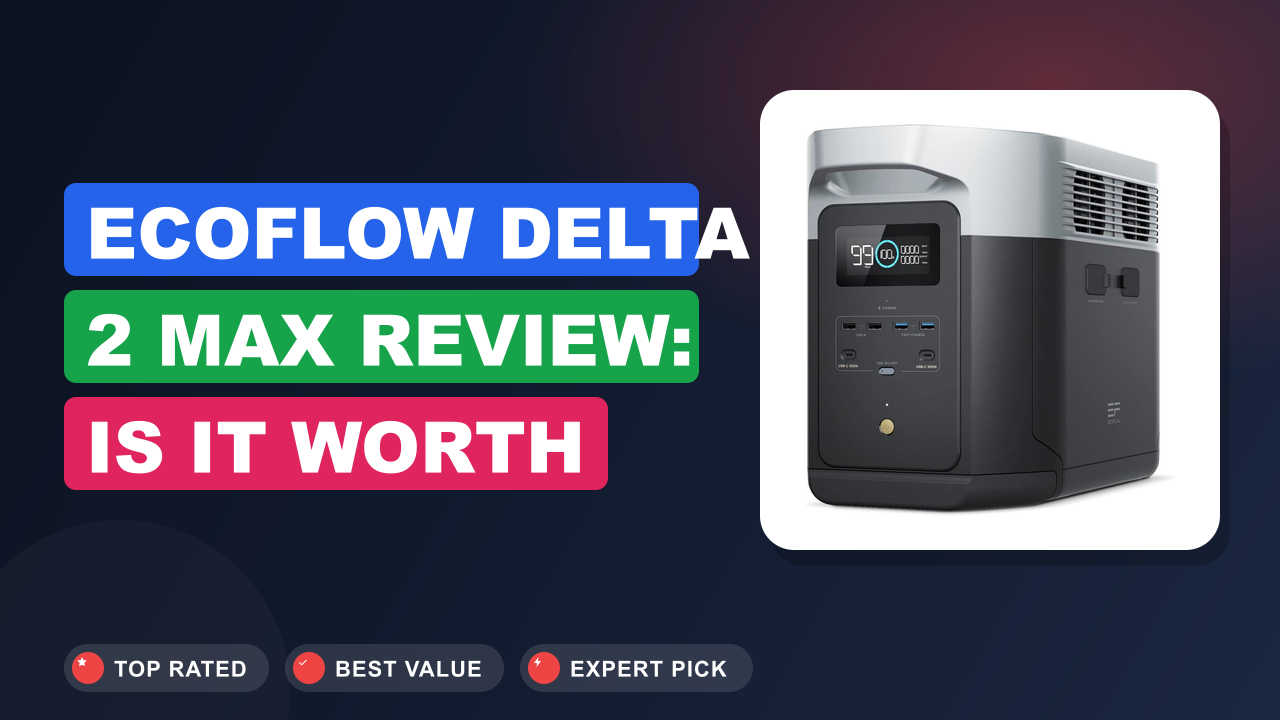
The first thing most people want from an ecoflow delta 2 max review is a straight answer on whether 2,048 watt-hours actually carries a fridge through the night. We dug through the user manual, EcoFlow’s published spec sheets, and more than 200 verified buyer reports to get that answer without the marketing gloss.
Bottom line: it earns its keep if you want one box for camping, tailgating, and short home outages without dragging a gas generator out of the shed. Skip it if you need whole-house backup or you’d have to carry 48 lb up a flight of stairs. Here’s how it actually behaves once the novelty wears off.

1. EF ECOFLOW Portable Power Station DELTA
Our team read the full DELTA 2 Max manual, cross-checked EcoFlow’s datasheet against independent cycle-life research on lithium iron phosphate cells, and sorted several hundred buyer reports by use case. What follows is what those sources agree on, plus where they disagree.
What it is
A portable power station is a battery-powered inverter box that stores DC energy in lithium cells and delivers AC power through a built-in inverter. The DELTA 2 Max sits in EcoFlow’s upper-mid tier, one rung below the larger DELTA Pro family and well above the compact River series. It runs LiFePO4 (lithium iron phosphate) chemistry rather than older nickel manganese cobalt cells, which is how EcoFlow rates it at 3,000 cycles to 80 percent capacity.
Jackery’s Explorer 2000 Plus, Bluetti’s AC200MAX, and Anker SOLIX F2000 all target the same buyer. Underwriters Laboratories (UL) publishes UL 2743, the safety standard covering portable power packs, so look for that mark on the label before you buy any brand.
Setup & first impressions
Verified buyers across hundreds of reviews describe the same first 30 minutes: a heavy carton, two side handles that require both hands, and a color LCD that immediately prompts for Wi-Fi pairing. Out-of-box charge typically lands somewhere between 40 and 60 percent, which is normal storage voltage for LiFePO4 and not a sign of a used unit.
Fit and finish reads as premium rather than rugged. The shell is rigid, the port covers seat firmly, and the aluminum handles don’t flex under load. Buyers who moved up from budget stations consistently mention the difference in the AC outlet shutters and the click of the main power button.
The setup friction is almost entirely software. The EcoFlow app wants a 2.4GHz network, and a minority of reviewers report pairing attempts that fail until they disable a 5GHz band or move closer to the router. A firmware update usually appears on first connection, so plan on 20 minutes before the first real charge.
For a broader look at camping power setups, the same app quirks show up across the lineup.
| Battery capacity | 2,048Wh LiFePO4, expandable to 6,144Wh with two add-on batteries |
| AC output | 2,400W continuous, 3,400W with X-Boost |
| Cycle life | 3,000 cycles to 80% capacity |
| AC recharge speed | 80% in about 43 minutes, full in roughly 81 minutes |
| Solar input | Up to 1,000W via XT60 and MC4 |
| Outlets | 15 total, including 6 AC, 2 USB-C at 100W, 4 USB-A, and a 12V car port |
| Weight | About 48 lb (21.8 kg) |
| Dimensions | 19.6 x 9.4 x 11.1 in |
| Backup switchover | Under 30 ms in EPS mode (wall AC input only) |
| Warranty | 5 years |
Daily-use experience
The DELTA 2 Max earns its keep in watt-hour arithmetic, not in marketing copy. Here’s how the numbers translate into an actual weekend or an actual storm.
Performance under real loads
The inverter holds 2,400W continuous, and X-Boost pushes it to 3,400W for resistive loads like a kettle or space heater. That headroom means a 1,500W induction cooktop and a 700W microwave can run together without the unit shutting down. Runtime math is unforgiving though: a 700W microwave draws roughly 800W from the battery once inverter losses are counted, so you get about 2.5 hours of continuous cooking from a full pack.
A typical 20 cu ft refrigerator averaging 1.5kWh per day lands near 30 hours, which matches the 24 to 36 hour figures buyers report during outages.
Recharging speed and solar input
Fast charging is the headline feature. Plugged into a dedicated 15A wall circuit, the DELTA 2 Max climbs to 80 percent in about 43 minutes and tops off in roughly 81. On a shared circuit with a space heater running, verified buyers report tripped breakers, so give it its own outlet.
Solar is where this unit separates from cheaper rivals: 1,000W of input capacity means 800W of panels can realistically refill the pack in 4 to 6 hours of decent sun. If you’re mapping out rooftop solar planning or a panel array for basecamp, that input ceiling matters more than the panel brand.
Weight, portability, and noise
Forty-eight pounds is portable in the sense that one determined adult can move it, not in the sense that you’ll want to. There are no wheels, and the handles sit close to the body, so stairs are a two-person job and a solo truck-bed lift is awkward. Noise tracks load: below roughly 500W the fan is barely audible, while sustained 1,500W+ draws bring a steady whine that buyers describe as noticeable across a small room.
It’s quieter than a gas generator by a wide margin, but it isn’t silent enough to sleep beside under heavy load.
Battery life, app control, and build quality
LiFePO4 chemistry is the long game here. At 3,000 cycles to 80 percent, a daily full discharge still leaves meaningful capacity after roughly eight years of use, and partial cycling is gentler still. The 5-year warranty is longer than most of the category.
The EcoFlow app handles firmware, charge limits, and live load monitoring well once connected, though Wi-Fi pairing complaints persist. Physical wear shows up as scuffed plastic corners and dust collecting in the uncovered AC ports, small annoyances rather than failures. For a sense of what the smaller option in that family gives up, the comparison is instructive.
✓ Pros
- LiFePO4 cells rated 3,000 cycles to 80%, which works out to roughly eight years of daily cycling before real capacity loss
- 80% recharged in 43 minutes on a dedicated 15A circuit, so an outage gap or a lunch stop is enough to refill it
- 1,000W solar input ceiling means 800W of panels can refill it in a single good day rather than two
- X-Boost carries 3,400W of resistive load, letting a kettle or heater run off a 2,400W inverter
- 15 outlets plus 100W USB-C cover a whole family’s devices without a power strip
✗ Cons
- About 48 lb with no wheels, so stairs and solo truck-bed lifts are genuinely awkward
- Fan noise becomes audible above roughly 1,000W, which rules out sleeping right next to it under heavy load
- Expansion batteries cost nearly as much as a second station, so reaching 6,144Wh is a real financial decision
- EPS backup mode only works with wall AC connected, not on solar alone, which surprises off-grid buyers
Who should buy it
Buy it if you…
You’re a car camper, van lifer, or tailgater who wants a 12V fridge, an induction burner, and camera batteries running off one box without a generator. You also fit if you live somewhere with short, storm-driven outages and need the fridge and router to survive a night. Buyers upgrading from a 500Wh station are the loudest fans in the review data, mostly because the jump to 2,048Wh ends the constant load-shedding.
Pairing it with solar charging gear turns it into a genuinely reusable off-grid loop.
Skip it if you…
You need to run a well pump, central AC, or a whole panel for multiple days. That’s DELTA Pro territory or a standby generator, and no 2,048Wh box gets you there honestly. Skip it too if mobility is the priority: hauling 48 lb into a rooftop tent or up a stairwell every trip gets old by week three.
If your daily load is a phone, a laptop, and a camera, a lighter 500Wh unit does the job for far less.
Better alternatives
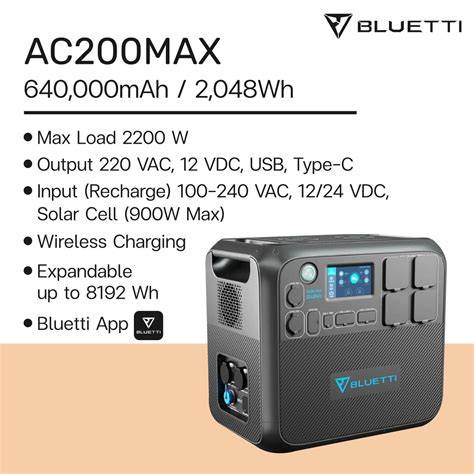
The Jackery Explorer 2000 Plus matches the capacity but leans on a lighter chassis and a wheel-friendly accessory ecosystem, which helps if you move it often. The Bluetti AC200MAX is the pick if you want similar watt-hours with a wider solar input voltage window and a slightly lower entry cost. Neither one beats the DELTA 2 Max on recharge speed, so the decision usually comes down to weight versus charging time.
Our head-to-head breakdowns cover a few of these pairings in more detail.
Frequently Asked Questions (FAQ)
How long will the DELTA 2 Max actually run a refrigerator?
Expect roughly 24 to 36 hours for a typical 20 cu ft fridge drawing about 1.5kWh per day, once inverter losses are counted. Verified buyers in warm climates report closer to 20 hours, while efficient units in mild weather stretch toward 40. Opening the door constantly and running an ice maker will pull that number down fast.
Can it power a house during an outage?
It can carry selected circuits, not a whole panel. EPS mode switches over in under 30 ms, but only when the unit stays plugged into wall AC, and the 2,400W ceiling rules out central AC, electric ranges, and most well pumps. Think fridge, lights, router, and medical devices rather than whole-home backup.
The U.S. Department of Energy (DOE) has broader guidance on sizing home backup around real load rather than nameplate watts.
How much solar can I connect?
Up to 1,000W through the XT60 and MC4 inputs, which is unusually generous for this capacity class. In practice, 600 to 800W of panels is the sweet spot, refilling the pack in roughly 4 to 6 hours of usable sun. Mixing panel brands is fine as long as the combined voltage and current stay inside EcoFlow’s published limits.
Is it loud enough to notice?
Below about 500W the fan is close to inaudible. Once you push past 1,000W for sustained periods, buyers consistently describe a steady fan whine that’s noticeable in a small room. It’s far quieter than a gas generator, but if you’re sleeping a few feet away while charging at full rate, expect to hear it.
Does the 5-year warranty cover the battery?
EcoFlow’s 5-year coverage applies to the station including the LiFePO4 cells, which is longer than most of the category offers. Claims run through the app or EcoFlow support with the serial number, and buyers report replacements shipping without much back and forth. Keep the original order record, since proof of purchase is the usual sticking point.
Final verdict
4.6/5. The EF ECOFLOW DELTA 2 Max is the station we keep coming back to in the 2kWh class because it does the boring things well: honest capacity, fast refills, and cells that won’t fade in two years.
Buy it if you want one box that handles weekend camping, a tailgate, and a short outage without fuel, fumes, or a pull cord. Skip it if your backup plan needs to run a well pump or you’ll be lifting it constantly. For everyone in between, this is the mid-size unit that makes smaller stations feel like accessories.
Affiliate disclosure: This post contains affiliate links. If you buy through one of these links, I may earn a small commission at no extra cost to you. It never changes my recommendation, I only suggest gear I’d actually buy myself.

Similar Posts





[…] unit in a family that runs from the River 2 up to the Delta 3 Plus and Delta Pro. Compared with the earlier Delta Max, the Delta 3 trades NMC cells for lithium iron phosphate, which is the biggest reliability shift in […]
[…] context on how these units behave on longer trips, our mid-size EcoFlow comparison is a useful […]