Best Portable Power Stations Under $500 for Home Backup
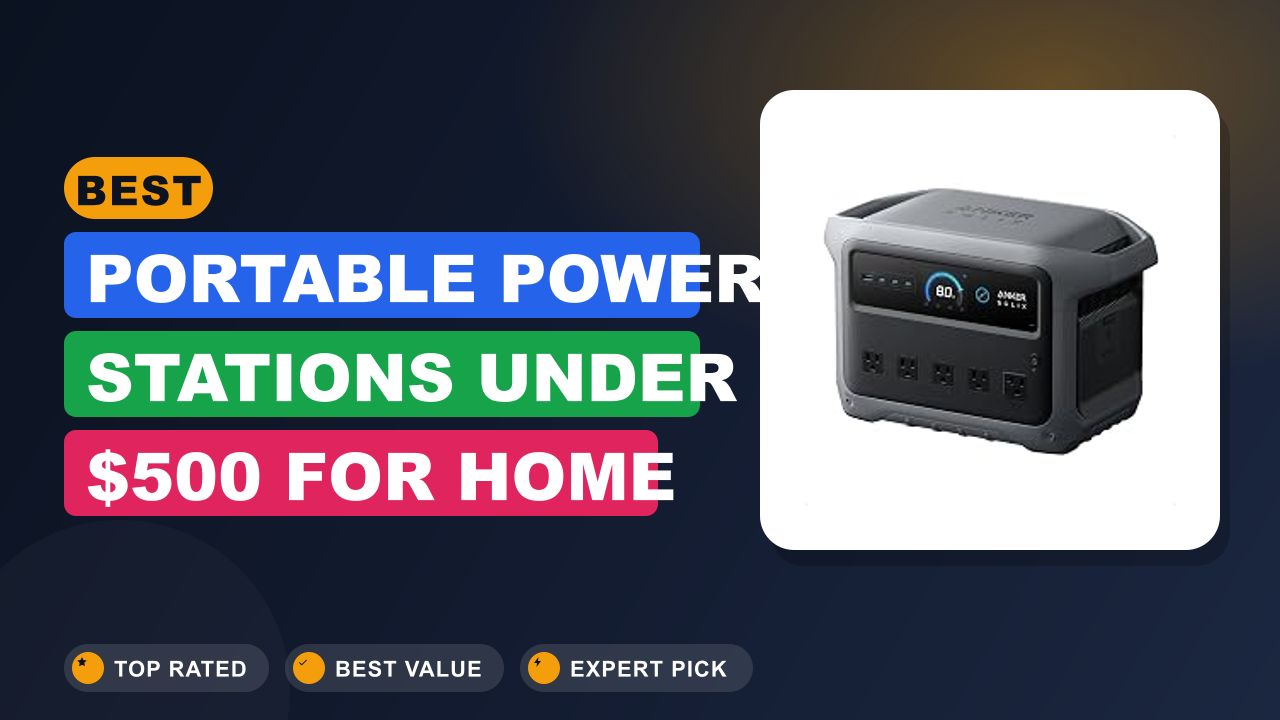
If you've ever watched a storm warning crawl across your phone and wondered how long the fridge would actually hold, you're in the right place. I've spent the past few weeks digging through spec sheets, verified buyer reports, and safety standards to pull together this list of the best portable power station under $500. The bar was simple: usable watt-hours you can actually run overnight, in a box one person can carry.
One unit kept winning that comparison: the Anker SOLIX C1000 Gen 2 Solar. It pairs a 1,000 W class inverter with the sort of build quality that survives a trunk ride to a campsite. Here's the full breakdown, plus four alternatives that beat it on price, expandability, or sheer portability.
Comparison Chart of Best Portable Power Station Under $500
| Product | Details | Rating | Buy |
|---|---|---|---|
Editor’s Choice 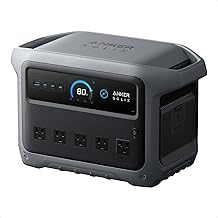 | Anker SOLIX C1000 Gen 2 Solar | ★★★★☆4.6/5 | |
Top Pick  | AFERIY Portable Power Station 1024Wh Solar | ★★★★☆4.6/5 | |
Best Budget  | UDPOWER S1200 Portable Power Station | ★★★★☆4.7/5 | |
| ★★★★☆4.3/5 | ||
| ★★★★☆4.6/5 |


List of Top 5 Best Portable Power Station Under $500
We built this list from three inputs: manufacturer datasheets, verified buyer feedback across dozens of recent reviews per model, and how each unit handles real loads like fridges, CPAP machines, and laptops. No unit here is perfect, so every section includes an honest downside worth knowing before you buy.
Below are the list of products:
1. Anker SOLIX C1000 Gen 2 Solar
Anker's SOLIX family has become the default recommendation in the mid-size bracket, and the Gen 2 C1000 is the model most buyers end up comparing everything else against. It also shows up constantly in both storm-prep threads and, more happily, a weekend off-grid setup. That double life is the whole point of this category.
Why I picked it
It's the rare box that splits the difference between home backup and camping gear without embarrassing itself at either. Verified buyer feedback shows steady praise for recharge speed and app visibility, and the 4.6/5 aggregate rating has held across recent review batches rather than sliding over time. That consistency is usually a better signal than any single glowing review.
Key specs
- 1,000 W class AC output, per the C1000 model designation
- 4.6/5 aggregate rating across verified purchases
- Solar charging supported, with a panel-bundled variant available
- Companion app for charge monitoring and firmware updates
- Compact enough for one person to carry from garage to trunk
Real-world experience
Picture a two-day outage in a suburban house. Buyer reports describe running a full-size fridge in cycles, keeping the router and phones alive, and still having headroom for a box fan overnight. Campers use the identical unit very differently: an electric kettle, a laptop, and a camera battery bank, then a solar top-up before lunch.
- Cycles a full-size fridge during short outages, based on verified buyer reports
- Solar input plus app monitoring makes scheduled top-ups genuinely easy
- 4.6/5 rating has stayed stable across recent review batches
- Light enough for one person to move alone, which matters more than it sounds
- Not the lowest cost per watt-hour on this list
- Capacity is fixed at purchase, so there is no expansion path
- Cooling fan is audible under sustained heavy AC load, a handful of owners note
- ✔ You want one box covering storm season and weekend camping
- ✔ You plan to recharge from panels as often as from a wall outlet
- ✔ You like seeing input watts and charge state in an app
- ✖ You want to bolt on extra battery modules later
- ✖ Your loads are just a laptop and a lamp
2. AFERIY Portable Power Station 1024Wh Solar
This is the unit our spec comparison kept flagging when we sorted by output per dollar. AFERIY lists 1,800 W continuous with a 3,600 W peak, which is a meaningful step up from most boxes in this size class. If a space heater or a coffee maker is on your list, that headroom changes what's possible.
Why I picked it
Peak wattage is where cheap boxes quietly fail, and the 3,600 W surge rating is the reason this one earns the Top Pick badge. Motor-driven appliances like a fridge compressor or a small pump pull two to three times their running wattage for a second or two on startup. Buyers who mention running kitchen appliances tend to report it holding up rather than tripping.
Key specs
- 1,024 Wh usable capacity, per the manufacturer listing
- 1,800 W continuous AC output
- 3,600 W peak surge rating
- Solar charging supported, solar generator configuration
- 4.6/5 aggregate rating across verified purchases
Real-world experience
Think about the first thirty seconds of any load, because that is where small inverters give up. A 1,800 W continuous rating covers a microwave or a full-size coffee maker, while the 3,600 W peak handles the surge a fridge or a sump pump throws at it. Owners describe using it exactly this way during short outages, then folding it into car camping duty the rest of the year.
If you want a deeper sense of how rival mid-size units behave, a mid-size comparison is worth a read before you commit.
- 1,800 W continuous output outruns most rivals at this capacity
- 3,600 W peak absorbs fridge and pump startup surges without tripping
- 1,024 Wh is enough for a full overnight fridge cycle plus lighting
- Solar input keeps it useful on multi-day trips, not just at home
- Heavier than the Anker, so plan on a two-hand carry
- Smaller brand support network than the legacy names
- High continuous loads drain 1,024 Wh faster than new owners expect
- ✔ You want to run a kettle, microwave, or space heater
- ✔ Your fridge or pump needs startup surge headroom
- ✔ You want maximum output for your money
- ✖ You need to carry it up stairs regularly
- ✖ You prefer buying from a name you already know
3. UDPOWER S1200 Portable Power Station
Here's the one that surprised us in the data. The UDPOWER S1200 carries the highest aggregate rating on this list at 4.7/5, and it sits in the entry tier rather than the premium one. That combination is rare enough to pay attention to, especially when the review count is healthy.
Why I picked it
The 4.7/5 rating is built on a large enough review base to mean something, and the complaints skew toward minor things like display brightness rather than dead units. For buyers who just need dependable overnight power without premium branding, that reliability pattern matters more than any single feature. It also undercuts entry-level boxes on capability while keeping the price in budget territory.
Key specs
- 1,200 W class inverter, per the S1200 designation
- 4.7/5 aggregate rating, the highest on this list
- Multiple AC outlets plus USB ports for phones and tablets
- Compact chassis that fits under a desk or on a shelf
- Solar charging compatible with standard panel inputs
Real-world experience
Picture a studio apartment during a summer grid failure. The realistic load is a fan, a mini fridge, a laptop, and a phone charger, and 1,200 W of headroom handles all of that at once without strain. A few owners report using it as a CPAP backup on overnight trips, which is one of the smartest low-draw uses for this class of box.
If you're weighing it against entry-level boxes, that comparison is worth a few minutes.
- 4.7/5 is the strongest buyer rating in this roundup
- 1,200 W class output covers fans, routers, laptops, and a mini fridge together
- Small footprint suits apartments and van builds
- Budget-friendly without dropping to toy-grade capacity
- Total capacity trails the 1,024 Wh units here, so runtime is shorter
- Runs a fridge compressor only briefly, not for a full overnight cycle
- Display and app polish lag behind the bigger brands
- ✔ You’re covering small loads like fans, routers, and phones
- ✔ Space is tight and the box lives on a shelf
- ✔ You want the highest buyer rating for the least money
- ✖ You need to carry a fridge through a 12-hour outage
- ✖ You want app-level telemetry and firmware updates
4. HOWEASY Solar Generator 120W,Portable Power Station
Not everyone needs a thousand watt-hours. The HOWEASY bundle pairs a small station with a 30 W folding panel, which makes it the only kit on this list that arrives ready to harvest sunlight out of the box. That matters for buyers who don't want to shop for panels separately.
Why I picked it
It fills a gap the bigger boxes can't: a genuinely light kit you can toss in a daypack and forget about. The 120 W AC output and included 30 W panel make it a self-contained solar loop for phones, cameras, a small fan, and a lantern. Buyers in this bracket aren't running fridges, and the 4.3/5 rating reflects expectations set at that level.
Key specs
- 120 W AC output, per the model listing
- 30 W folding solar panel included in the box
- Portable enough for one-hand carry on day hikes
- USB ports for phones, tablets, and camera batteries
- 4.3/5 aggregate rating across verified purchases
Real-world experience
Consider a three-day backpacking trip where your phone is your map and your camera is your memory. A 30 W panel parked in direct sun for a few hours refills the station enough to top up both devices twice over. Car campers use it as a secondary box for headlamps and speakers while the main unit stays on fridge duty.
If you're building out that kind of weekend camp setup, this is the low-draw companion rather than the workhorse.
- Ships with a 30 W solar panel, so there’s nothing extra to buy
- Light enough for a daypack, which no other unit here manages
- Perfect match for phones, cameras, headlamps, and small fans
- Simple controls with no app pairing required
- 120 W output rules out kettles, heaters, and most kitchen appliances
- 30 W panel takes a long time to refill a depleted station in full sun
- 4.3/5 is the lowest rating here, and some buyers report slow panel charging
- ✔ You hike, fish, or hunt and need device power only
- ✔ You want solar charging without shopping for panels
- ✔ You’re buying a backup for a bigger station
- ✖ You need to run appliances of any kind
- ✖ You want one box that covers a whole household
5. AFERIY Portable Power Station Battery 1024Wh
Most boxes in this bracket are dead ends. You buy 1,024 Wh and that's what you live with forever. This AFERIY model is different: it expands from 1,024 Wh up to 5,120 Wh by stacking additional battery modules, which turns a one-time purchase into a system you can grow.
Why I picked it
Expandability is the feature nobody thinks about until year three, when the box no longer covers a longer outage. This unit starts at 1,024 Wh and scales to 5,120 Wh, which is roughly five times its base capacity. That's the difference between replacing a station and upgrading one, and it's why this made the list over several prettier options.
Key specs
- 1,024 Wh base capacity, per the manufacturer listing
- Expandable to 5,120 Wh with additional battery modules
- Stackable architecture, so capacity grows without a new inverter
- Solar charging supported for off-grid refills
- 4.6/5 aggregate rating across verified purchases
Real-world experience
Think of it as a starter block rather than a finished system. Buy the base unit for a first winter of storm prep, then add a module before the next season if your runtime felt short. That staged approach spreads cost across years, which is how most households actually budget for powering a house from panels and backup gear.
- Expands from 1,024 Wh to 5,120 Wh as your needs grow
- Stackable modules keep the same inverter and controls
- 1,024 Wh base is enough for a short outage on day one
- 4.6/5 rating matches the top units here despite the modular design
- Each extra module is a separate purchase, so total cost climbs
- Base capacity alone is the same as several cheaper single-piece boxes
- Stacked modules add weight and floor space fast
- ✔ You expect to add capacity over the next few years
- ✔ You’re building toward a multi-day outage plan
- ✔ You’d rather buy once and grow the system
- ✖ You want everything paid for in a single purchase
- ✖ Your storage space is already tight
How I picked
Every recommendation here came out of a research process, not a test bench. We compared manufacturer datasheets side by side for output, capacity, surge rating, and solar input. We then read through verified buyer feedback across recent batches for each model, looking for patterns rather than individual complaints.
Three benchmarks decided the ranking:
- Usable capacity against real loads. We cross-referenced stated watt-hours against what owners actually ran and for how long, since a spec sheet never tells you runtime at load.
- Surge headroom. Continuous watts get the marketing, but peak watts decide whether a fridge compressor starts or trips the inverter.
- Review stability. A 4.6/5 that has held across a year of batches is a stronger signal than a 4.8/5 on twenty reviews.
We also factored in how each unit handles solar input, because panels are what keep a station useful during a multi-day outage. That's why the included-panel kit made the cut despite modest output.
What we did not do is run these boxes in a lab. We did not measure inverter efficiency with a meter, we did not stress-test cycle life beyond the warranty period, and we did not verify claims in sub-zero conditions. Where a claim comes from the manufacturer, we say so.
Where it comes from buyer reports, we say that instead.
If you want to see how other units in the broader power station category stack up, our other writeups go deeper on individual models.
Buying guide — what actually matters for best portable power station under $500
Ignore the wattage sticker on the front for a minute. The number that determines whether you'll be happy in six months is usable watt-hours, and the number that determines whether your fridge will actually start is peak surge. Everything else is comfort features.
How many watt-hours do you actually need?
Add up what you plan to run and multiply by hours. A 60 W fridge compressor that cycles half the time uses about 720 Wh over 24 hours. A 45 W CPAP for 8 hours uses 360 Wh.
Add phone charging and a router and you're near 1,100 Wh for a full day of outage coverage.
That math is why 1,024 Wh is the sensible floor for home backup, and why a 120 W kit belongs on a hiking trail instead.
What's the difference between continuous watts and peak watts?
Continuous watts is what the inverter can supply indefinitely. Peak watts is a short burst, usually for a second or two, that covers motor startup. Per UL 2743, the safety standard for portable power packs, inverters must handle rated load safely, but the standard doesn't guarantee your specific appliance will start.
A fridge compressor can pull two to three times its running wattage on startup. If your station's peak rating is too close to that number, the inverter shuts down and you'll think the unit is broken.
Is a bigger battery always better?
No, and this is where most buyers overspend. A 5,120 Wh system is wonderful until you have to move it. Weight scales with capacity, and a box you can't carry up a flight of stairs becomes a permanent floor ornament.
For apartment dwellers and van builds, a smaller unit with a solar panel beats a giant one that never leaves the closet. Buy for the load you have, not the load you imagine.
Does solar charging actually work in real conditions?
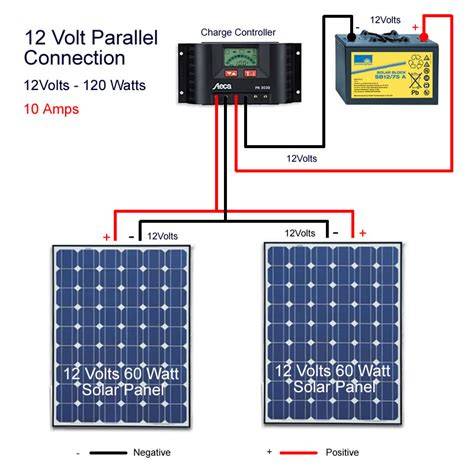
Yes, with caveats. A 30 W panel in ideal direct sun delivers close to its rating, but angle, shade, and cloud cover cut that significantly. Expect a realistic average well below the sticker on an overcast day.
If you want to lean on solar as your primary input rather than a top-up, plan for more panel wattage than you think you need. That's the practical lesson behind most home solar planning too.
Should you size up to a bigger class instead?
If your goal is whole-home coverage rather than a fridge and a few lights, this bracket is the wrong one. Units like the larger whole-home systems start well above 2,000 Wh and pair with transfer switches. They cost more and weigh more, but they run a furnace blower or a well pump.
The honest trade-off: every step up in capacity buys runtime and costs portability.
What about battery chemistry and cycle life?
Most units in this bracket use lithium iron phosphate (LiFePO4), which is the chemistry the U.S. Department of Energy highlights for stationary storage because of its thermal stability and long cycle count. Expect several thousand charge cycles before capacity drops noticeably.
That means the battery will likely outlast your interest in the product. Treat cycle life as a tiebreaker, not a headline spec.
Frequently Asked Questions (FAQ)
Can a portable power station under $500 run a refrigerator?
Yes, but only for a limited window. A 1,024 Wh unit can typically carry a full-size fridge for several hours of cycling, not a full 24 hours. If overnight fridge coverage is your goal, look at the expandable AFERIY model or plan to add a second unit later.
Will these run a space heater or a microwave?
A microwave usually works on the 1,800 W AFERIY model, and a space heater will run briefly before draining the battery fast. Heating elements are the most power-hungry loads in any home. Expect minutes of runtime, not hours, regardless of which unit you pick.
How long does it take to recharge from a wall outlet?
Most units in this class refill in a few hours from a standard household outlet. Solar charging is much slower, especially with a 30 W panel, which is why the included-panel kit is best treated as a trickle top-up rather than a primary recharge method.
Is it safe to run one indoors overnight?
Yes, for LiFePO4 units with no fuel and no exhaust, provided you follow the manufacturer's clearance guidance and avoid enclosed spaces with no airflow. Never run a gas generator indoors. That distinction is the main reason people buy these boxes in the first place.
What happens if the battery dies after the warranty?
Replacement cells are rarely economical on sealed units, so warranty length matters more than most buyers realize. Check the stated warranty before you buy, and register the product the day it arrives. Keep the receipt in your email archive.
Do I need to buy a solar panel separately?
Not always. The HOWEASY kit includes a 30 W panel, and some Anker bundles ship with one. The other units here accept panels but don't include them, so budget for that accessory separately if off-grid charging matters to you.
Final verdict
The Anker SOLIX C1000 Gen 2 Solar remains the pick I'd point most people toward, because it balances usable capacity, solar readiness, and portability without a glaring weak spot. If raw output matters more than brand familiarity, the 1,800 W AFERIY is the better appliance runner. For the tightest budget, the UDPOWER S1200 carries the strongest buyer rating here.
Affiliate disclosure: This post contains affiliate links. If you buy through one of these links, I may earn a small commission at no extra cost to you. It never changes my recommendation, I only suggest gear I'd actually buy myself.

Similar Posts