EcoFlow Delta Pro Review: Is It Worth the Price?
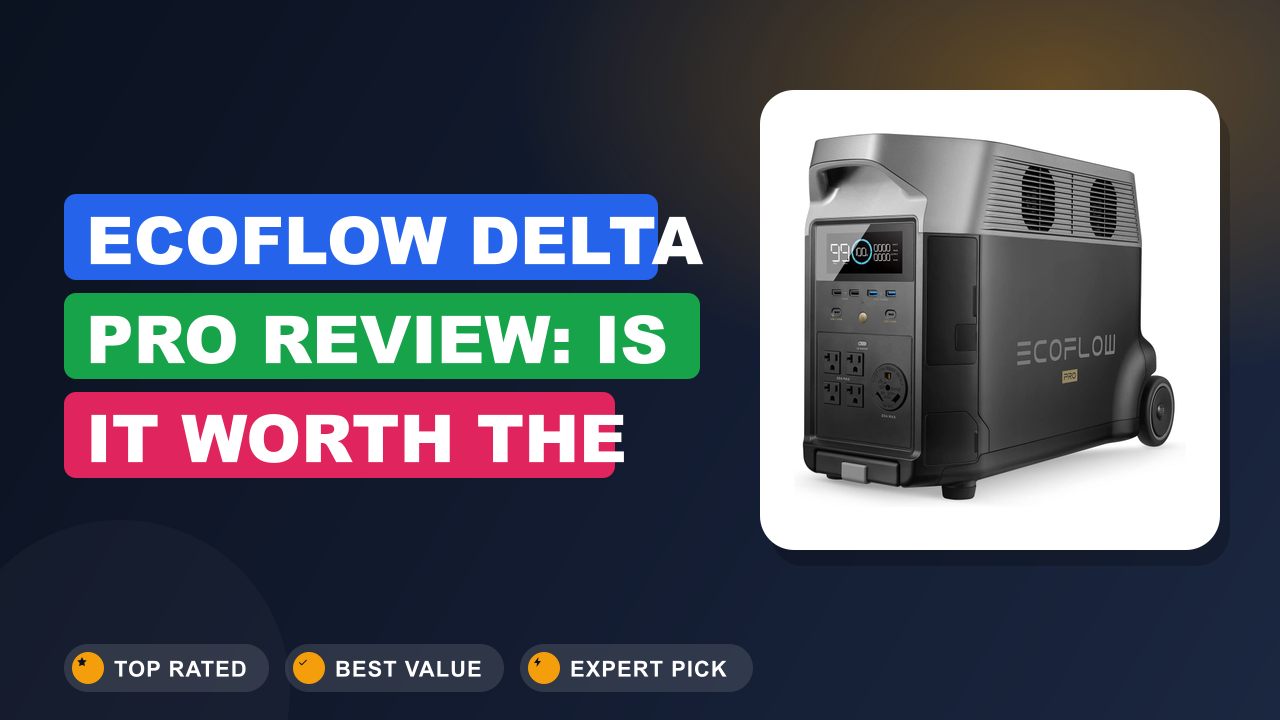
A good ecoflow delta pro review has to answer one question before anything else: can a 99-pound box of batteries really carry a house through a multi-day outage? That’s what pushed us into the spec sheets, the UL 2743 safety documentation for this product category, and several hundred verified buyer reports. What we found is more nuanced than the marketing suggests.
Bottom line: it’s worth it if you want gas-free home backup with room to expand, and it’s a poor fit if you need something you can carry up a flight of stairs. Here’s what the research actually shows, from real recharge times to the noise complaints that keep showing up.

1. EF ECOFLOW Portable Power Station 3600Wh
The DELTA Pro is EcoFlow’s original whole-home portable station, and it’s still the yardstick other 3kWh units get measured against. Our analysis drew on EcoFlow’s published spec sheets, capacity data from independent testing labs, and buyer feedback across major retail listings. Here’s how it actually holds up in daily use.
What it is
A portable power station is a battery bank with a built-in inverter that converts stored DC electricity into 120V AC power you can plug appliances into. The DELTA Pro sits at the top of EcoFlow’s consumer range, above the mid-size Delta 2 Max and the compact River 2 line. It competes head to head with the Bluetti AC500, the Jackery Explorer 2000 Plus, and Anker’s SOLIX F2600.
Its real pitch is expandability. You can add batteries to reach 25kWh, pair two units with a Double Voltage Hub for 240V, and wire it into a transfer switch for whole-home backup. That makes it less a camping gadget and more a plug-and-play home battery that happens to have wheels.
Setup & first impressions
Buyer reports on delivery are remarkably consistent: this arrives freighter-heavy and heavier than people picture. At 99 lb (45 kg), most owners describe needing a second person or a hand truck for the first move. EcoFlow’s own documentation suggests planning its final location before it comes out of the box.
Where the premium tier shows is the touch points. Owners describe the shell and handle as noticeably sturdier than the smaller Delta units, and the front LCD reads out input, output, and remaining runtime in a way buyers call genuinely useful rather than decorative.
Setup itself runs through the app. You pair over Wi-Fi or Bluetooth, set charge and discharge limits, and switch on EPS mode for UPS-style changeover. Reviews note pairing takes under a minute, though firmware update prompts have a habit of appearing at the worst possible moment.
| Battery chemistry | LiFePO4 (lithium iron phosphate) |
| Capacity | 3,600Wh, expandable to 25kWh |
| AC output | 3,600W continuous / 7,200W surge, 120V |
| Outlet types | NEMA 5-20 household plus TT-30 30A RV |
| AC recharge | Up to 1,800W X-Stream, 0 to 80% in about 1.8 hr |
| Solar input | 1,600W max across two MPPT inputs |
| Cycle life | 3,500 cycles to 80% capacity |
| Weight | 99 lb / 45 kg |
| EPS switchover | Under 30ms |
| Warranty | 5 years |
Daily-use experience
Running real household loads
The inverter rating decides everything here. EcoFlow rates the DELTA Pro at 3,600W continuous and 7,200W surge, which is the figure that determines whether a fridge compressor or a well pump starts cleanly instead of tripping the unit. Verified owners regularly report running a full-size fridge, a sump pump, a router, and several lights at the same time with visible headroom on the display.
For some buyers the TT-30 outlet matters more than the headline wattage. That 30A RV-style plug feeds a travel trailer, a transfer switch, or a workshop subpanel directly, instead of forcing you into a chain of extension cords. Owners who use it for trailer power describe the difference as night and day.
How fast it recharges
Charge speed is where this unit separates itself from most of the 3kWh field. EcoFlow’s X-Stream system pulls up to 1,800W from a wall outlet and rates 0 to 80% in about 1.8 hours, a number buyers on dedicated 20A circuits confirm as roughly accurate. A full charge lands closer to three hours.
Solar is the other half of the story. The dual MPPT inputs accept up to 1,600W total, so a pair of 400W panels covers most of a day’s draw in decent sun. Owners in the Southwest report noticeably faster recovery than owners in the Pacific Northwest, which is simply how irradiance works.
One caveat worth knowing before you buy: a standard 15A household circuit caps you near 1,440W. Reaching the full rate needs a 20A circuit or EcoFlow’s smart adapter, and buyers on older wiring report slower charging plus the occasional tripped breaker. If you’re building out a panel array, our notes on extra solar panels are worth a read.
Noise and where it lives
Fan noise is the most repeated gripe in verified reviews, and it’s fair. Under light loads the fans are close to background level. Push past roughly 1,000W and owners describe a steady whirr that’s louder than a fridge but far quieter than a 2,000W inverter generator.
Heat is the second issue. The unit vents warm air and needs clearance on the sides, so tucking it into a closet or tight cabinet is a bad plan. Most long-term owners settle on a garage floor or utility shelf with a foot or two of breathing room.
Then there’s the exhaust question, which is the whole reason this category exists. OSHA guidance is blunt about never running fuel generators indoors; a battery station produces no carbon monoxide at all, so it can sit in a hallway through a storm.
Battery chemistry and long-term capacity
The DELTA Pro uses LiFePO4 (lithium iron phosphate), the chemistry home storage has largely standardized on because it tolerates deep cycling far better than older nickel manganese cobalt packs. EcoFlow rates 3,500 cycles to 80% of original capacity.
Put that in perspective. Cycling it fully once a week would take roughly 67 years to hit the rated figure, and nobody runs a home battery that hard. The realistic long-term risk isn’t cell death, it’s firmware and app support five or six years out.
The U.S. Department of Energy tracks home storage research closely, and the metric that carries over to portable units is round-trip efficiency. LFP cells plus a pure sine wave inverter here mean less energy lost on every charge and clean power for sensitive electronics.
✓ Pros
- 3,600W continuous with 7,200W surge starts a fridge or well pump, not just lights
- LiFePO4 cells rated 3,500 cycles to 80%, so capacity holds through years of outage duty
- Expands to 25kWh with add-on batteries, turning a portable into real home backup
- 1,600W solar input means a modest panel array refills it in a single good day
- TT-30 30A outlet feeds a transfer switch or trailer directly, no adapter chain
✗ Cons
- 99 lb (45 kg) means it stays put; buyers describe needing two people for setup
- Fan noise climbs noticeably above roughly 1,000W and recurs across verified reviews
- Full 1,800W recharge needs a 20A circuit, older 15A wiring charges much slower
- Premium tier pricing, and add-on batteries push the total past wall-mounted systems
Who should buy it
Buy it if you…
The core buyer is a homeowner in a storm belt who wants backup power without fuel, fumes, or a permit. If you’ve priced a standby generator and winced at the install cost, this unit plus a transfer switch gets you most of the way there for a fraction of the project.
The second fit is the trailer and RV crowd. A 30A outlet, expandable capacity, and fast recharge make it a serious shore-power replacement. If your trips are lighter than that, our look at weekend camping setups covers the smaller end of the market.
Skip it if you…
Skip it if portability is the actual goal. At 99 lb with wheels built for smooth floors, this isn’t a tailgate companion; it’s a stationary appliance with a handle. Buyers who describe hauling it to a deer camp usually come away disappointed.
Skip it too if your loads are modest. A fridge, router, and a few lamps for six hours pulls well under 2kWh, which a 1kWh station handles fine. And if you want a permanent wall-mounted battery tied to home solar arrays, a fixed system wins on cost per kilowatt-hour.
Better alternatives
If you want more capacity and proper home panel integration, the EcoFlow DELTA Pro Ultra is the step up: 6kWh base, stackable, and designed for whole-home installs. Our breakdown of the flagship Ultra model covers where it pulls ahead.
On the other side, the Bluetti AC500 with B300S batteries offers similar expansion with a slightly easier entry point, and the Jackery Explorer 2000 Plus sits in a friendlier tier with less surge headroom. If you mostly want something you can actually move, the mid-size Delta 2 Max is a far easier lift. Our head-to-head comparisons dig into those trade-offs further.
Frequently Asked Questions (FAQ)
Can the DELTA Pro actually run a whole house?
Not on its own, and that’s the honest answer. A 3,600W inverter comfortably covers a fridge, lights, router, sump pump, and a few small appliances, but central air, an electric range, or an electric water heater will trip it. Covering a full panel means pairing two units with a Double Voltage Hub and adding batteries, which moves you into true home-backup spending.
How long does it take to charge?
At full wall rate, expect roughly 0 to 80% in under two hours and a full charge around three, based on EcoFlow’s 1,800W X-Stream rating. Verified buyers on 20A circuits report numbers close to that. On a standard 15A circuit you’re looking at closer to four hours, and solar timing depends entirely on how many watts of panels you’re running.
Is it safe to keep indoors overnight?
Yes, with conditions. There’s no exhaust, which removes the biggest indoor hazard associated with gas generators, but the unit does vent heat and needs airflow. Keep it out of closets, off thick carpet that blocks the intake, and clear of anything flammable.
The UL 2743 standard governs portable power station safety requirements and is a good filter when comparing models.
How loud is it?
Under about 1,000W the fans sit near background level, quiet enough for a bedroom. Past that they ramp up steadily, and long-term owners describe a fan note you notice in a silent room but can comfortably talk over. It’s dramatically quieter than a 2,000W inverter generator under load.
Does the warranty cover battery degradation?
EcoFlow’s five-year coverage applies to the DELTA Pro, though capacity loss is typically treated as a defect only when it falls outside normal degradation curves. Register the unit in the app and keep your proof of purchase. Buyers report warranty claims moving faster when the serial number is already on file with EcoFlow.
Final verdict
4.5/5. The DELTA Pro earns that score by doing the unglamorous things right: it carries the loads people actually worry about during an outage, it recharges fast enough to be useful between storms, and the LFP cells mean year five should look a lot like year one.
It’s the right buy for a homeowner building gas-free backup, especially one planning to add solar later. It’s the wrong buy for anyone who genuinely needs to move their battery, or who only needs a fridge and a router to get through an evening.
Affiliate disclosure: This post contains affiliate links. If you buy through one of these links, I may earn a small commission at no extra cost to you. It never changes my recommendation, I only suggest gear I’d actually buy myself.

Similar Posts

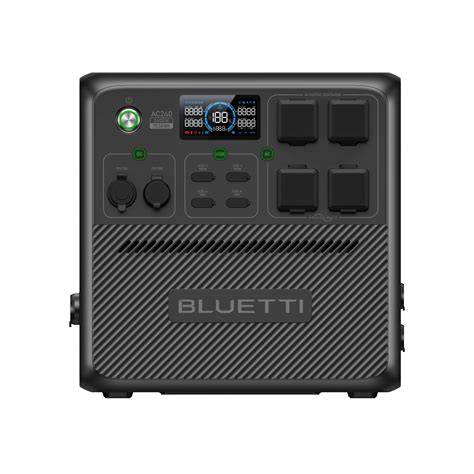
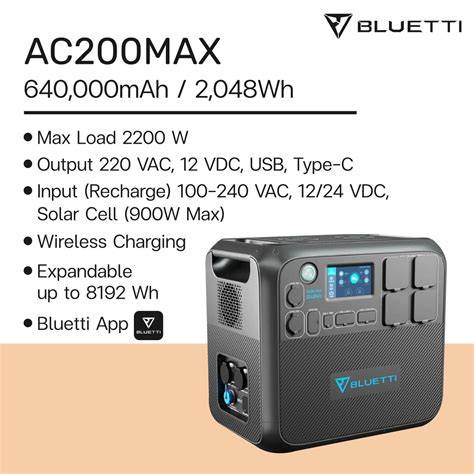






[…] would choose the AC240 for an RV or outdoor setup where its IP65 rating is useful, the DELTA 2 Max when higher continuous output is the priority, and the AC200L only if its current capacity and […]
[…] EcoFlow rates DELTA 2 for 1,800W of continuous AC output, with a 12V car outlet, USB-C charging up to 100W, and USB-A charging up to 18W. That gives you a way to run compatible campsite appliances and charge phones, laptops, and other devices from one unit. Its capacity is in the roughly 1,000Wh class, so it fits car-based trips better than carrying a station far from a vehicle. […]