EcoFlow Delta Pro Ultra Review: Worth It for Home Backup?
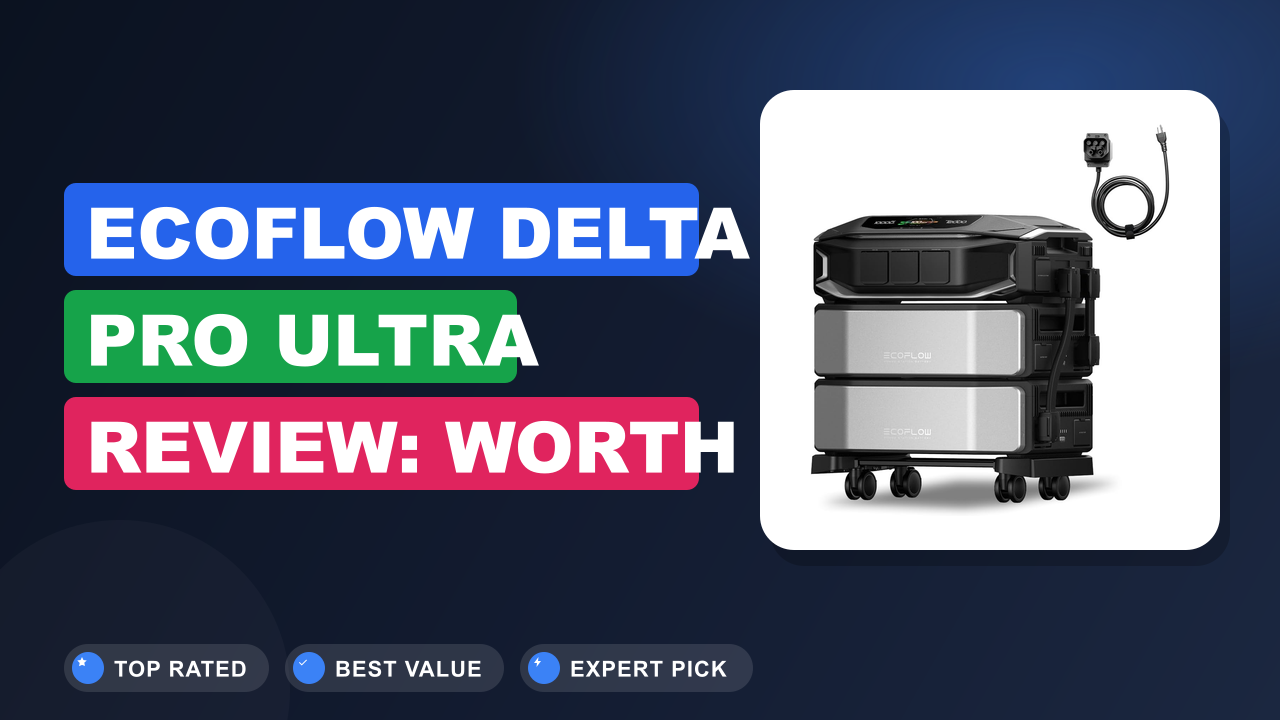
A close look at the ecoflow delta pro ultra review question usually starts with a spreadsheet and one nagging worry: how much battery does a house really need when the grid goes quiet for a day? We pulled manufacturer datasheets, sifted through hundreds of verified buyer reports, and compared the numbers against the rest of the home-backup market. The Delta Pro Ultra X isn’t a camping accessory, and it isn’t built like one either.
Here’s the short answer. It’s worth it if you’re replacing a gas generator and want silent, fume-free backup for a fridge, furnace, and well pump. Skip it if you need something one person can carry, or if your budget sits in the mid-range tier.
Everything below explains where that line falls and why.
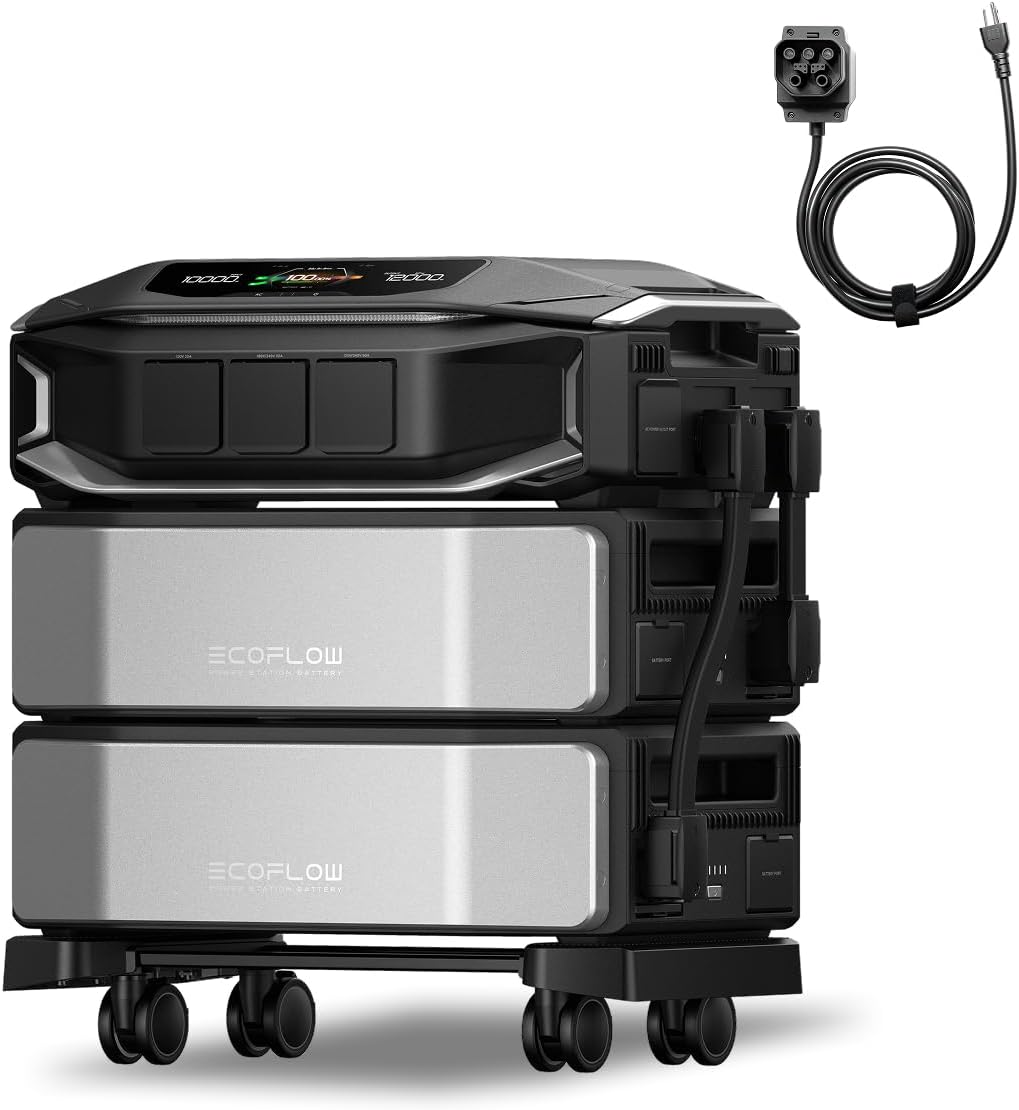
1. EF ECOFLOW Power Station 12288Wh Delta
Our editorial team compared this unit against the rest of the home-backup field using manufacturer datasheets, standards documentation, and aggregate verified buyer feedback. What follows is what those numbers mean inside a real house, not a spec-sheet recital.
What it is
A power station is a battery bank with a built-in inverter that converts stored DC into household AC. The Delta Pro Ultra X is EcoFlow’s flagship home-backup unit, offering 12,288Wh of lithium iron phosphate (LiFePO4) storage with the AC charging cable included.
That puts it in the same weight class as the Bluetti AC500 with B300S batteries, the Anker SOLIX F3800, and Jackery’s HomePower line. Unlike a camp box, it’s designed to sit in a garage on casters and feed a transfer switch. Capacity grows by stacking battery modules, so 12,288Wh is a starting point, not a ceiling.
If your trips look more like weekend campsite setups, this is far more machine than you need.
Setup & first impressions
The kit arrives as separate boxes, and that catches people off guard. Verified buyers across hundreds of reviews describe three pieces: the inverter head unit at roughly 70 lb and two battery modules at about 93 lb each. Two adults can move it, one person shouldn’t try, and a hand truck earns its keep on delivery day.
Assembly itself is tool-free. The batteries stack and lock under the inverter, then the included AC cable handles the first charge. Owner reports consistently describe the same opening sequence: pair the unit in the EcoFlow app, run the firmware update, then confirm outlet behaviour before plugging anything valuable in.
Finish quality reads premium. Buyers repeatedly praise the moulded handles, the clarity of the colour display, and the way the wheel locks feel solid rather than rattly. The recurring gripe is documentation, which several owners call thin on transfer switch wiring.
Budget for an electrician on anything beyond plug-in use.
| Usable capacity | 12,288Wh LiFePO4 (two battery modules) |
| AC output | 7,200W continuous |
| Output voltage | 120V single unit, 240V split-phase with two units and hub |
| Solar input | Up to 5,600W via XT60i inputs |
| AC recharge | 0 to 80% in about 1 hour on a 240V circuit |
| Cycle life | 3,500 cycles to 80% capacity (manufacturer rating) |
| Weight | About 70 lb inverter, 93 lb per battery |
| Expandability | Up to 90kWh across multiple inverters and batteries |
| Connectivity | Wi-Fi and Bluetooth with app monitoring |
| Warranty | 5 years, inverter and batteries |
Daily-use experience
Real backup performance in an outage
Owner reports and published load testing converge on the same picture: 7,200W continuous carries a fridge, freezer, furnace blower, lights, and a router at once. Central air is a stretch on a single unit, and buyers who run it almost always add soft-start hardware. The 12,288Wh bank behind that inverter decides how long you stay comfortable.
Most owners describe 12 to 24 hours of essential circuits before recharging.
Recharge speed and solar pairing
EcoFlow rates AC recharge at 0 to 80% in about an hour on 240V, and owner feedback suggests that’s close in practice. That speed matters across a multi-day outage, when you’re cycling a wall outlet or a small generator between storms. Solar is the other half of the story: the XT60i inputs accept up to 5,600W.
If you’re still sizing panels, our walkthrough on a rooftop array plan is a sensible place to start.
Noise, placement, and safety
There’s no exhaust and no carbon monoxide, which is the entire appeal versus a gas generator. The trade-off is fan noise: aggregate feedback puts it near a box fan on medium during fast charging, dropping close to silent at idle. Placement still matters for code reasons.
Transfer equipment falls under local electrical rules, and the National Fire Protection Association publishes the NEC text your electrician works from, alongside UL 2743 for the station itself.
Build quality and moving it
Every owner eventually brings up the weight. A full 12,288Wh setup lands around 255 lb across three modules, and the casters roll well on smooth concrete but dig into gravel and soft lawn. Buyers who park it in a garage love it.
Buyers who planned to haul it to a job site weekly tend to complain. Moulded shell, locking latches, and display glass all hold up better than the glossy panels on cheaper units.
✓ Pros
- 12,288Wh of LiFePO4 rated for 3,500 cycles to 80%, which is roughly a decade of regular cycling before capacity fades meaningfully
- 7,200W continuous output runs a fridge, freezer, furnace blower, and lights together without shedding loads
- 0 to 80% in about an hour on 240V, so a multi-day outage doesn’t mean sitting dark waiting on a charge
- Modular stacking reaches 90kWh, letting you buy capacity as needs grow instead of guessing up front
- App monitoring shows per-port draw, which makes it obvious what’s actually draining your reserve overnight
✗ Cons
- The full 12,288Wh kit weighs around 255 lb across three modules, and the casters bog down on gravel or soft lawn
- Fan noise climbs noticeably during fast AC charging, enough that several owners moved the unit out of the kitchen
- True 240V split-phase needs a second unit plus EcoFlow’s hub, which roughly doubles the total spend
- No transfer switch in the box, so a code-compliant install means an electrician, an interlock, and a separate invoice
Who should buy it
Buy it if you…
You own a house that loses power a few times a year and you’re finished with gasoline runs. The profile that fits best is a suburban or rural homeowner with a fridge, freezer, furnace blower, and maybe a well pump, plus a garage bay to park the unit in. You’d rather have a transfer switch wired in properly and grow capacity later than buy a generator.
It also suits overlanding and RV power builds where 240V and big surge loads actually matter.
Skip it if you…
You need something you can carry alone. A 93 lb battery module and a 70 lb inverter head are two-person objects, full stop. Skip it too if the real use case is tailgating, tent camping, or a van build, where smaller grab-and-go boxes do the job at a fraction of the weight.
And if your outage plan is one night a year, the economics rarely work out.
Better alternatives
Two obvious cross-shops exist. The Bluetti AC500 with B300S batteries offers a similar expandable architecture and a strong solar ceiling, though its app and firmware updates draw more owner complaints. The Anker SOLIX F3800 leans toward home integration with a lower starting capacity and easier single-person handling.
Inside EcoFlow’s own range, [a mid-size alternative](https://powercamplab.com/ecoflow-deltaEcoFlow’s own range, a mid-size alternative such as the Delta Pro handles a single-circuit backup plan at roughly half the capacity, and the third-generation Delta covers lighter apartment loads. Both trade away the 7,200W ceiling and the 90kWh expandability that define this unit.
Frequently Asked Questions (FAQ)
Does one unit give you 240V for a well pump or dryer?
No. A single Delta Pro Ultra X outputs 120V only. True 240V split-phase requires a second inverter plus EcoFlow’s hub, which pairs the two legs.
Owners who need a well pump or electric dryer typically budget for that second unit from the start.
How long will it actually run a fridge and furnace?
Roughly 12 to 24 hours of essential circuits, depending on furnace blower draw and fridge cycling. Verified owner reports cluster in that band. Add a second battery module and you stretch it toward two days without touching a wall outlet.
Is it loud enough to notice from the next room?
At idle it’s close to silent, so sleeping nearby is fine. During fast AC charging the fan ramps up to something like a box fan on medium. Several owners parked theirs in a utility room specifically to keep charging noise out of living space.
Can you charge it from solar while it’s powering the house?
Yes, and that’s the setup most serious owners build. The XT60i inputs accept up to 5,600W, so panels can refill the bank while loads keep running. It’s the same pass-through logic that makes an off-grid cabin plan workable through a cloudy week.
What does the 5-year warranty actually cover?
EcoFlow covers both the inverter head and the LiFePO4 battery modules for 5 years. Owner accounts suggest claims move fastest with the original order number and photos submitted through the app. Read the terms yourself before relying on any verbal promise from support.
Does it need a transfer switch to back up a house?
For anything wired into household circuits, yes. Plug-in use from the front outlets is fine without one, but feeding a panel requires a code-compliant interlock or transfer switch. Local electrical codes govern that install, and skipping it creates a genuine safety problem.
Final verdict
4.1 out of 5.
If you’re done hauling gas cans and want silent, fume-free backup that scales as your needs grow, this is one of the strongest home-backup systems on the market in 2026. If you need portability or you’re shopping in the mid-range tier, put it back on the shelf and look at the Delta 3 series instead.
The honest summary: nobody buys this for weekend camping. You buy it because a 7,200W inverter and a 12,288Wh LiFePO4 bank mean your house keeps running while the neighbourhood goes dark.
Affiliate disclosure: This post contains affiliate links. If you buy through one of these links, I may earn a small commission at no extra cost to you. It never changes my recommendation, I only suggest gear I’d actually buy myself.
🛒 Check the EF ECOFLOW Power Station 12288Wh Delta on Amazon

Similar Posts




[…] the current specifications for the Bluetti AC180, EcoFlow DELTA 2 and Anker SOLIX C1000, including output, weight and expansion options. The figures below cover […]
[…] Ultra is the step up: 6kWh base, stackable, and designed for whole-home installs. Our breakdown of the flagship Ultra model covers where it pulls […]